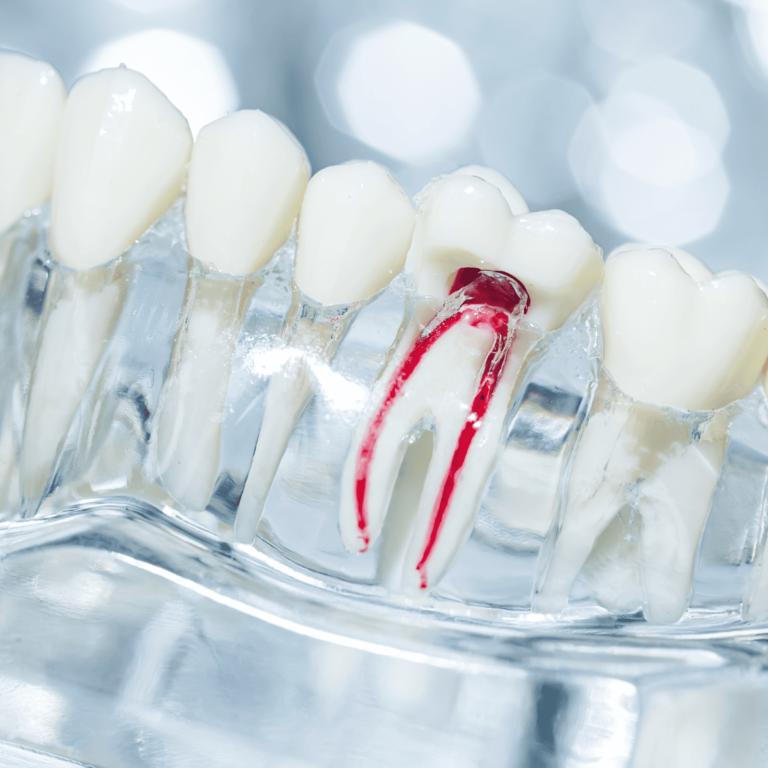
Overview
Pain or swelling after a root canal needs a dental review, but symptoms alone cannot show why it happened. Possible causes include an untreated canal, a leaking restoration, new decay, a crack or healing that has not progressed as expected. The examination and X-rays determine whether retreatment or specialist assessment is appropriate.
- Book a review if pain returns, the tooth hurts when biting or the gum swells.
- Bring past X-rays and details of the previous treatment and final restoration.
- Seek urgent medical help for breathing or speaking difficulty, or swelling near the eye or neck.
First, book a dental review
If a root canal treated tooth becomes painful again, hurts when you bite, or develops swelling, arrange a dental assessment. These symptoms do not prove that the earlier treatment failed. The cause may involve the tooth, its final filling or crown, or surrounding tissues. Your dentist can examine the area and discuss the next step.
Tell the practice when the root canal was completed, when the symptoms started and whether the tooth has a permanent restoration. Bring earlier X-rays or treatment records if you have them. Do not wait for severe pain: a problem can sometimes develop without obvious symptoms.
What signs should you mention?
Report pain that persists or returns, tenderness when chewing, swelling, a pimple on the gum, a bad taste, or a loose or damaged filling or crown. A tooth can also need review because of an X-ray finding even when it feels comfortable. The dentist needs to investigate; no symptom or photograph can confirm failure by itself.
Why can a treated tooth develop another problem?
The American Association of Endodontists describes several possible reasons a treated tooth can become painful or diseased again. The causes below require a dental examination to distinguish.
- A canal was difficult to find or treat: Root canals can be narrow, curved or unusually shaped. A canal that was not found or could not be fully treated during the first procedure can allow disease to persist. This is one possibility to investigate, not something that symptoms alone can establish.
- The final filling or crown did not seal the tooth: After root canal treatment, the tooth needs a suitable final restoration. A delay in placing it, or a restoration that later becomes loose, cracked or leaky, can allow saliva and bacteria to reach the treated area. The dentist will check both the restoration and the tooth underneath it.
- New decay developed: A tooth can develop new decay after a successful root canal. If decay reaches the treated space, the tooth can become infected again. Regular reviews and cleaning still matter even though the nerve tissue has been removed.
- The tooth developed a crack: A new or previously undetected crack can affect the seal and the chance of keeping the tooth. Cracks differ in location and extent, so the treatment plan depends on what the dentist finds rather than on the word “crack” alone.
- Healing has not progressed as expected: A tooth may remain tender or show changes around its roots months or years later. An X-ray needs to be interpreted together with the examination and earlier images. A new symptom does not automatically mean the first treatment was done incorrectly.
What will the dentist check?
The dentist will ask about your symptoms and treatment history, examine the tooth and surrounding gum, check the restoration and bite, and usually review dental X-rays. They will assess whether the tooth can be predictably restored and whether a referral to an endodontist is appropriate. The findings, rather than pain alone, guide the plan.
The review is more useful if it answers three separate questions:
- Where is the problem? Examination and images help distinguish the treated tooth from nearby teeth and surrounding tissues.
- Can the tooth be restored? The dentist checks decay, cracks, the remaining tooth and the seal of its filling or crown.
- Who should treat it? If canals are complex or a previous procedure needs repeating, the dentist can explain whether an endodontist should assess it.
Can root canal treatment be repeated?
Sometimes. Root canal retreatment may be considered when the tooth can be saved and the cause can be addressed. It involves reopening the tooth, removing the previous root filling, cleaning and sealing the canals again, then completing a suitable final restoration. Complex cases may need an endodontist. Your dentist should explain the expected benefits, limitations, follow-up and costs for your tooth before treatment.
The AAE patient guide to retreatment explains that a tooth may become painful or diseased months or years after treatment and that a further procedure can sometimes help. No article can tell you whether retreatment will work for a particular tooth.
When is it urgent?
See a dentist promptly if you have persistent pain, swelling, fever, pain on biting or a bad taste. healthdirect advises emergency medical care if toothache or swelling causes problems breathing or speaking, or swelling around the eye or neck. In an Australian emergency, call 000.
This is general information. A dentist must examine the tooth before diagnosing the cause or recommending retreatment.
Related service
Sources

Meet a dentist
Dr. Crystal Zhang
Dr Crystal lists root canal treatment and dental restorations among her clinical interests. She can assess your symptoms and discuss the next step.